Published by Yala Media Group | April 2026
Muslim life gets treated too often as a list of obligations and prohibitions. Do this. Don’t do that. Pray five times. Fast for thirty days. Give your zakat. And all of that matters — deeply. But Islam is also a tradition that produced the greatest civilization the world has ever seen, a tradition of curiosity and travel and beauty and hospitality and food and art and scholarship and adventure.
This list is for the Muslim who wants to live fully within their faith, not despite it. Some of these are deeply spiritual. Some are purely fun. Most are both. All of them are things that, when you’re old and looking back, you’ll be glad you did.
1. Perform Hajj or Umrah — and if you’ve done one, do both
This feels obvious to put first, but it deserves the top spot because too many Muslims treat it as something that happens eventually rather than something they are actively working toward.
Umrah can be done at any time of year, is accessible to most Muslims with reasonable planning, and produces a kind of spiritual reset that is hard to describe to someone who hasn’t experienced it. Standing in front of the Kaaba for the first time — the structure that billions of people around the world turn toward in prayer every day — is one of those experiences that reorganizes something inside you.
Hajj is the greater pillar — the once-in-a-lifetime obligation for those who are able — and its scale is unlike anything else on earth. Two to three million Muslims gathered in one place, from every nation on earth, wearing the same simple white ihram, performing the same rituals that Ibrahim (AS) established thousands of years ago. The feeling of being part of something that vast and that old is not available anywhere else.
If you’ve done Umrah, start saving for Hajj. If you’ve done Hajj, go back for Umrah. The Prophet ﷺ said: “Follow up the Hajj and Umrah, because they both eliminate poverty and sins just as fire eliminates the impurities of iron, gold, and silver.”
2. Pray Fajr in congregation at a masjid — consistently, for at least one full month
This one requires nothing but commitment. No passport, no savings plan, no special circumstances.
There is something about Fajr in congregation that is categorically different from Fajr alone. The darkness outside. The quiet of a city not yet awake. The small group of people who chose to be there. The imam’s recitation in the stillness. The feeling afterward of having started your day with the best possible thing.
The Prophet ﷺ said that the reward of Isha and Fajr in congregation is like praying the whole night. Do it for thirty days consecutively and notice what changes — not just spiritually, but practically. Your mornings expand. Your days start differently. Your relationship with time shifts.
This is the most underrated item on this entire list.
3. Walk the streets of Istanbul at the call to prayer
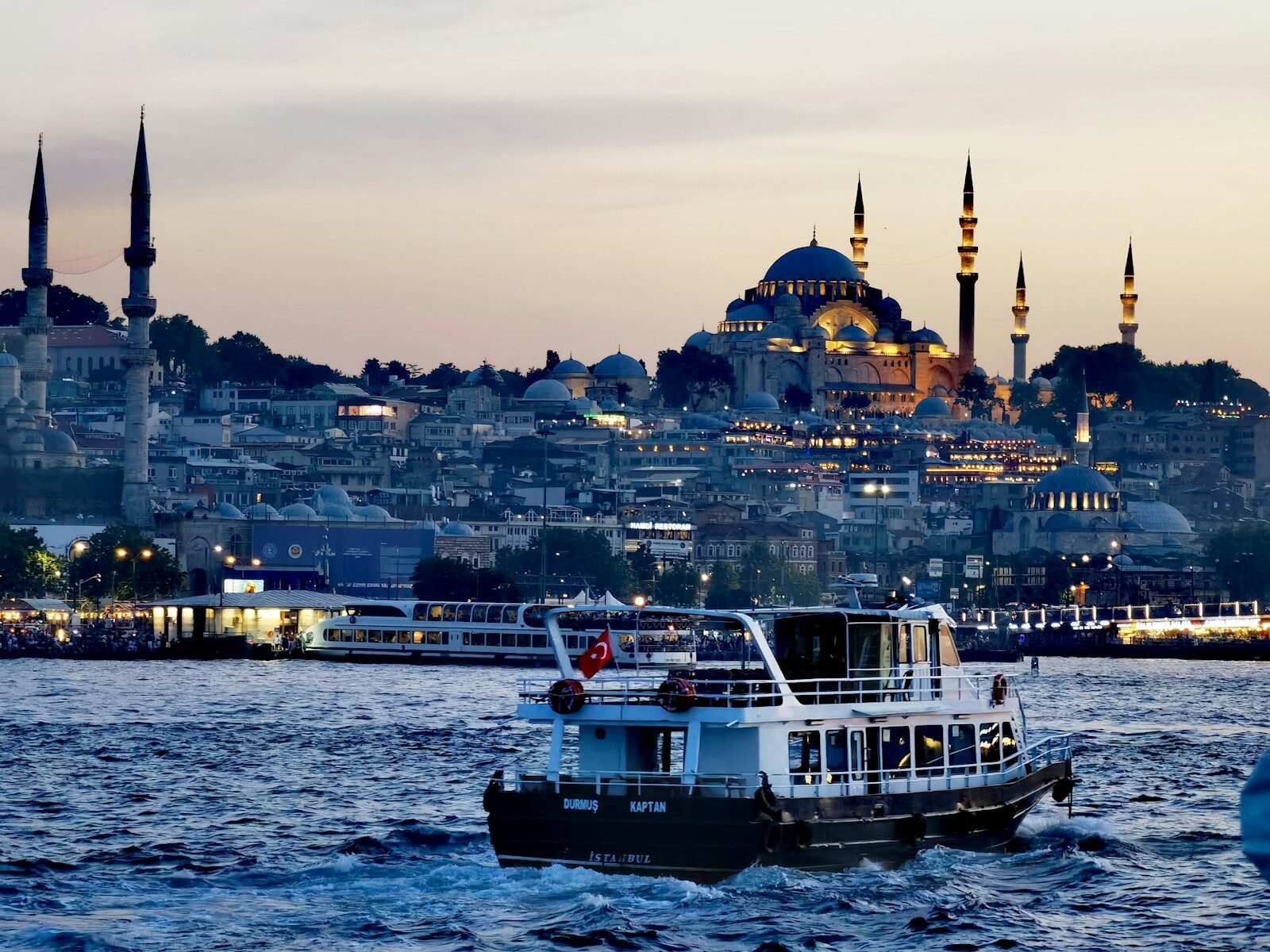
Walking through Istanbul feels like time-travel — from the call to prayer echoing from the Blue Mosque to sipping Turkish tea by the Bosphorus.
Istanbul is the city that most viscerally communicates what Islamic civilization looked like at its height. The Hagia Sophia — converted from a church to a mosque, then a museum, then a mosque again — is not just an architectural wonder but a living symbol of history’s turning. The Blue Mosque, the Grand Bazaar, the Topkapi Palace, the Bosphorus waterway that separates Europe and Asia — every corner of this city carries the weight of empires.
But what makes Istanbul spiritually distinct from being merely a beautiful historic city is the azaan. When the muezzin calls from the minarets in Istanbul — and in this city the call is real, not recorded, layered across dozens of mosques in different neighborhoods — the city becomes something else entirely. Find yourself in a tea house or on a ferry on the Bosphorus at Maghrib time and let the azaan find you. It will stay with you.
4. Memorize Surah Al-Mulk and recite it every night
The Prophet ﷺ said: “There is a Surah in the Quran of thirty verses which intercedes for its companion until he is forgiven. It is Surah Al-Mulk.”
Thirty verses. Approximately four pages of Arabic text. With consistent daily practice most adults can commit this to memory in four to eight weeks. It is one of the most achievable hifz goals and one of the most rewarding — because you recite it every night, it stays with you in a way that a surah memorized once and rarely used does not.
Surah Al-Mulk is also simply beautiful. It describes the creation of the heavens, the stars, the birds in flight, the water beneath the earth — all as signs of Allah’s sovereignty and wisdom. Reciting it at night while actually thinking about what you’re saying is a different experience from recitation as ritual.
Memorize it. You will never regret it.
5. Visit Samarkand, Uzbekistan — the forgotten heart of Islamic civilization
Samarkand in Uzbekistan is an absolutely fascinating place to explore Islamic culture. The ancient city was once the pride of the Silk Road with gigantic mosques, the most colorful madrasahs and tombs rivaling anything you might see in Egypt and beyond.
Most Western Muslims have never heard of Samarkand. That is a genuine loss. This was the city of Tamerlane’s empire, one of the intellectual centers of the medieval Islamic world, a crossroads of the Silk Road where Persian, Turkish, Arabic, and Central Asian cultures merged into something extraordinary. The Registan Ensemble — three enormous madrasahs facing each other across a central plaza, covered in intricate blue tilework — is among the most beautiful things built by human hands anywhere on earth.
And because it is relatively unknown to Western tourists, you can experience it with a fraction of the crowds that overwhelm more famous Islamic heritage sites. It is a place that reminds you of the breadth of the Islamic world and the civilizational accomplishment of the ummah — which is a feeling every Muslim should have at least once.
6. Cook a full Eid meal from scratch — for people outside your immediate family
Eid celebrations in Muslim families can become insular over time — the same people, the same dishes, the same gathering. There is real beauty in that continuity. But there is a different kind of beauty in opening your table to people who don’t have family nearby, converts who don’t have a Muslim community to celebrate with, neighbors who have never experienced Eid, or the new family at the masjid who arrived six months ago and don’t yet know anyone.
The Prophet ﷺ emphasized feeding people as an expression of faith so consistently and with such specificity that it is hard to read the hadith on this topic without feeling like you should be cooking something right now. Eid is the perfect occasion to channel that — not as charity but as hospitality, which is a different thing. Charity feeds. Hospitality welcomes.
Cook something real. Invite people you don’t know well enough yet. Let the meal do what meals do.
7. Spend a night in the desert somewhere in the Muslim world
The desert is woven into the Islamic imagination in a way that no other landscape is. The Quran was revealed in the Arabian desert. The Prophet ﷺ lived most of his life in arid terrain. The early Muslim armies crossed vast deserts to carry the message across continents. The spiritual tradition of isolation and reflection — the Prophet’s regular retreats to the Cave of Hira before revelation — has desert as its backdrop.
The Empty Quarter desert, or Rub’ al Khali, offers unparalleled solitude and an almost spiritual sense of awe. But you don’t have to go to Saudi Arabia. The deserts of Jordan, Morocco, Oman, and Egypt all offer accessible, extraordinary experiences for Muslim travelers.
Sleeping outside in the desert — away from city light, under a sky full of stars, in genuine silence — is a spiritual experience that requires no theological framework to appreciate and is deepened enormously by one. The vastness of the sky and the smallness you feel under it is one of the most direct encounters with awe available to a human being. Allah (SWT) uses the stars repeatedly in the Quran as signs of His power and knowledge. To actually see them — thousands of them, in a way that city life makes impossible — is to understand why.
8. Read the entire Quran in a language you understand
Most Muslims have completed the recitation of the Quran in Arabic. Far fewer have read it cover to cover with comprehension — understanding each ayah as they go rather than reciting from memory or habit.
Reading the Quran in translation — with a good tafsir alongside for difficult passages — is a completely different experience from recitation. The Quran reveals itself as an argument, a narrative, a legal code, a comfort, a warning, a poetry collection, a philosophical treatise, and a love letter simultaneously. Reading it with comprehension for the first time is often described by Muslims as one of the most significant intellectual and spiritual experiences of their lives.
This is not a replacement for Arabic recitation. It is an addition to it. Do both. Start today. Read three pages each morning after Fajr and you’ll complete it in approximately seven months.
9. Go on a group Islamic heritage trip with strangers who become family
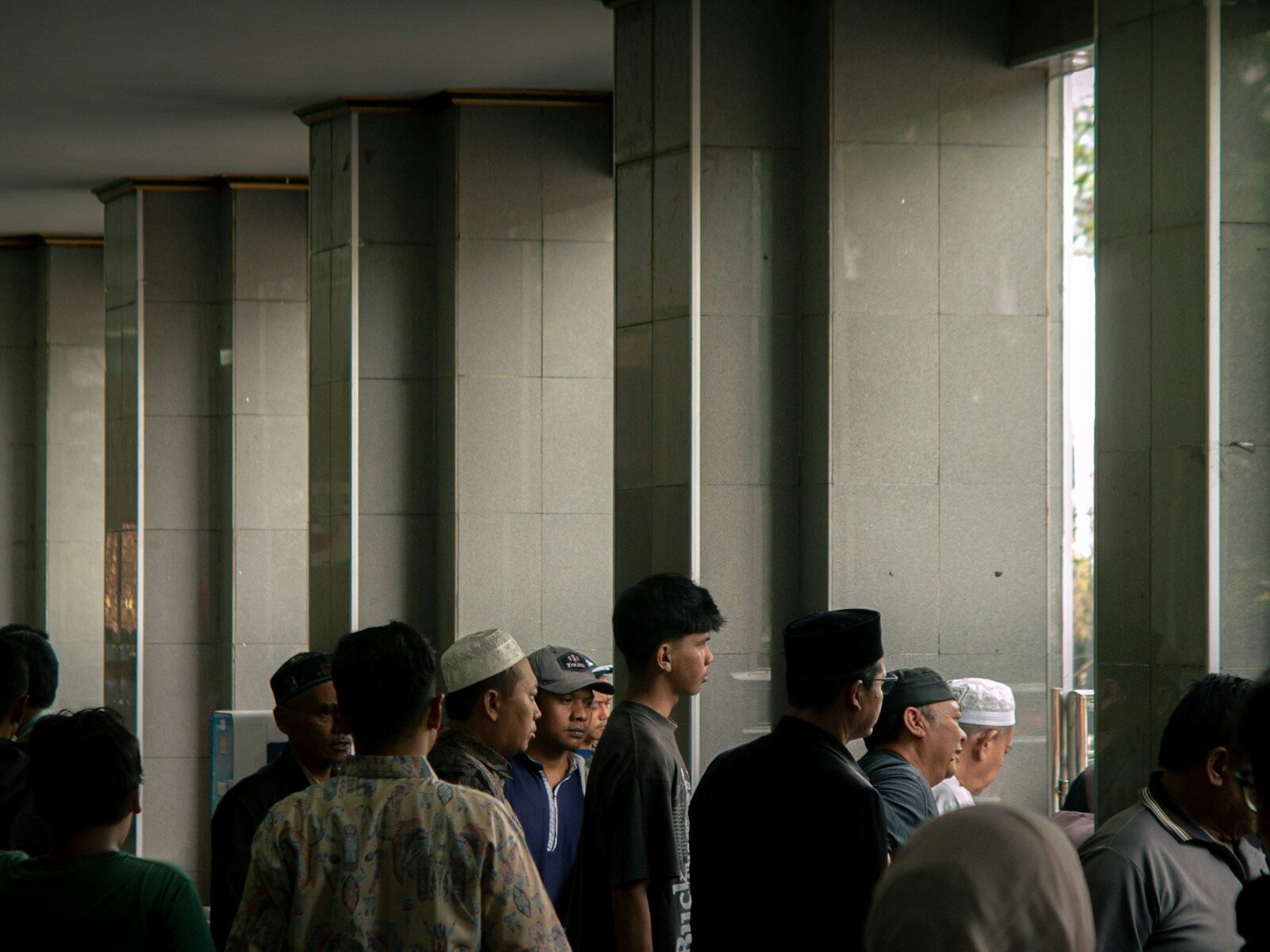
Muslim travelers in 2026 are seeking deeper connections with local communities, authentic cultural experiences, and itineraries that respect personal and spiritual values — prioritizing slower, more meaningful travel over packed, fast-paced itineraries.
There is a genre of travel that Muslim organizations have been quietly perfecting for years — group Islamic heritage tours to Bosnia, Jordan, Morocco, Andalusia, Senegal, and beyond. These trips combine historical and architectural exploration with communal prayer, shared meals, and the particular intimacy that develops when a group of strangers travels together with a shared sense of purpose.
The testimonials from people who’ve taken these trips are remarkably consistent: they came as visitors and left as family. They learned things about Islamic history they had never known. They prayed in places they will never forget. They made friendships that lasted.
The Halal Travel Guide, Islamic Relief’s travel programs, and various Islamic centers organize these trips regularly. If you have never traveled with a Muslim group to a place of Islamic heritage, add it to the list. The community dimension of this experience is as much the point as the destination.
10. Learn at least enough Arabic to understand your salah
You pray five times a day. The words you’re saying were revealed in Arabic and are among the most important words ever spoken. And yet the majority of non-Arab Muslims recite those words without knowing what they mean — not because they don’t care, but because no one told them it was achievable.
It is achievable. Functional Quranic Arabic — enough to understand Surah Al-Fatiha, the basic tasbeeh and dua of salah, and the most commonly recited surahs — requires roughly 200 to 300 core vocabulary words and basic grammatical patterns. That is achievable in six months of consistent daily study.
Apps like Bayyinah TV, the Arabic with Husna course, and Quranic.com have made this more accessible than it has ever been. The goal is not fluency. The goal is presence — to know what you’re saying when you stand before Allah five times a day. That transformation in salah alone is worth every minute of the effort.
11. Give a truly anonymous sadaqah — one that no one, including you, can trace back to you
The Prophet ﷺ described the highest forms of charity as those given with the left hand while the right hand doesn’t know. The concept of giving where no acknowledgment is possible — where you cannot receive thanks, cannot be known as generous, cannot experience social credit for the act — is one of the purest tests of niyyah in the Islamic tradition.
Give money to someone who needs it without them knowing it was you. Put cash in an envelope. Leave it where it will be found. Make a donation to a cause through a channel that preserves your anonymity. The experience of giving with no possibility of recognition is qualitatively different from any other kind of giving. It forces the niyyah to be purely for Allah — because there is no earthly return available.
Do it once and notice how it feels. Then do it regularly.
12. Sit with a scholar — in person, seriously, with real questions
The tradition of Islamic knowledge transmission is fundamentally personal. The isnad — the chain of narration that connects hadith to the Prophet ﷺ — is built on one human being sitting with another, asking and listening. The scholars of Islam were themselves students before they were scholars, sitting at the feet of those who came before.
In 2026 there is more Islamic content available online than any human could consume in a lifetime. Lectures, podcasts, YouTube channels, online courses — the quantity is extraordinary. What is rarer, and more valuable, is sitting with an actual scholar in person — with your actual questions, in a real conversation, where they can push back and you can ask follow-up questions and they can read your face and know whether you actually understood.
Find a scholar at your masjid, at an Islamic conference, at a retreat, or through a local Islamic center. Come prepared with the questions you’ve been carrying. The experience of being taken seriously in your seeking — of a real scholar engaging with your real questions — is something that online learning cannot replicate and that every Muslim deserves to have at least once.
A note on this list
Not everything here requires money or travel. Not everything requires a specific life stage. Reciting Surah Al-Mulk tonight costs nothing. Praying Fajr in congregation tomorrow costs nothing. Giving an anonymous sadaqah this week costs whatever you decide to give.
The life of a Muslim is not a life of constraint — it is a life of orientation. The constraints are real, but they create a shape that, if you inhabit it fully, turns out to be a remarkably rich and beautiful life. The Prophet ﷺ said: “Strange are the ways of a believer, for there is good in every affair of his.”
Do the things on this list. The good will be there.
Yala Media Group builds technology for the Muslim community where giving is structural, transparent, and effortless. Our browser extension turns everyday browsing and Amazon shopping into passive sadaqah — automatically, at no cost to you. Learn more at yalamediagroup.com.