Published by Yala Media Group | April 2026
Let’s be honest about what we’re solving for here. Bacon is not beloved because it’s pork — it’s beloved because of what curing and smoking pork does to produce a specific combination of saltiness, smokiness, fat, and crispiness. That combination — not the pork — is what Muslim food lovers are trying to replicate.
The good news is that the curing and smoking process that produces bacon works on other meats and even on some plant proteins. The result is not identical to pork bacon, because different meats have different fat content and muscle structure. But it is genuinely satisfying — and in some cases, Muslim food lovers have found they actually prefer the halal alternatives.
This guide covers every meaningful halal bacon alternative available in 2026, with honest assessments of what each one does and doesn’t do well, where to find it, and how to cook it.
The critical caveat: “pork-free” is not the same as halal
Before the alternatives, the most important practical point: a product being made from turkey, beef, or chicken does not automatically make it halal. Halal certification requires that the animal was slaughtered according to Islamic law — with the name of Allah (bismillah), by a Muslim slaughterer, in a manner that drains the blood and avoids unnecessary suffering.
Under USDA FSIS regulations, any product labeled “Halal” requires third-party certification. A product that says “no pork” or “turkey bacon” without a halal certification symbol from IFANCA, the Islamic Society of North America (ISNA), the Halal Transactions of Omaha, or another recognized halal certifying body may be pork-free but is not halal-certified.
When buying meat-based bacon alternatives, look for:
- IFANCA (Islamic Food and Nutrition Council of America)
- ISNA (Islamic Society of North America)
- HTO (Halal Transactions of Omaha)
- Crescent certified products from recognized Islamic organizations
For plant-based alternatives, the concern shifts from slaughter method to additives — alcohol-based flavorings, animal-derived emulsifiers (from pork), and gelatin are the main halal concerns in plant-based products. Read ingredient labels carefully.

Meat-based halal alternatives
1. Beef bacon — the most satisfying substitute
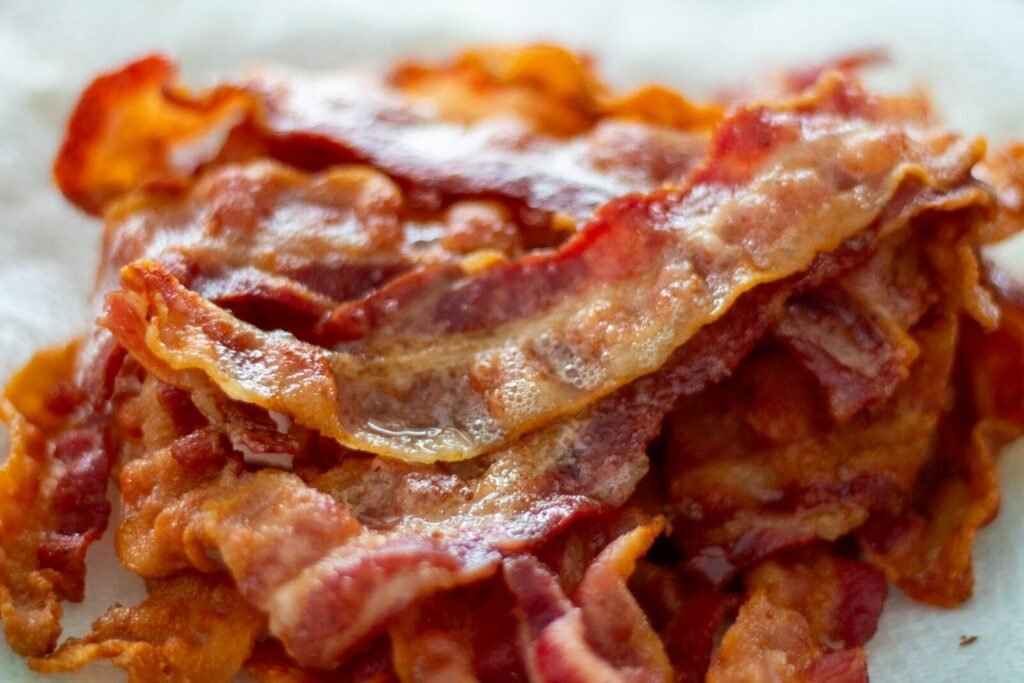
Beef bacon is the consensus favorite among Muslims who have tried multiple alternatives. Made from beef belly or brisket, cured and smoked using the same techniques as traditional bacon, it comes closest to the flavor profile of pork bacon among meat-based alternatives.
The reason beef bacon works: beef belly has sufficient fat content to produce the crisping that makes bacon bacon. When smoked and cured properly, the result is genuinely smoky, salty, and crispy in a way that turkey and chicken alternatives frequently are not.
Where to find halal-certified beef bacon:
Al-Safa Foods produces halal beef breakfast strips that are widely available in halal grocery stores and increasingly in mainstream stores in areas with large Muslim populations. Saffron Road and other specialty brands produce halal-certified beef bacon available online and through Amazon.
Many local halal butchers make their own beef bacon — often from brisket or beef belly, house-cured and smoked. This is often the best version available and worth seeking out at your local halal butcher.
How to cook it: Like pork bacon — pan or skillet over medium-high heat, letting the fat render, flipping until crispy. Beef bacon can take slightly longer than pork bacon to reach the desired crispiness because beef fat renders differently.
Best for: Breakfast, BLT-style sandwiches, pasta carbonara, pizza topping, anything where crispiness and smokiness matter most.
Honest assessment: The best beef bacon is genuinely excellent — not “pretty good for halal bacon” but actually excellent. The worst beef bacon can be tough and greasy. Quality varies significantly by producer; try a local halal butcher’s version before committing to a mass-produced brand.
2. Turkey bacon — the most accessible option
Turkey bacon is the most widely available halal-adjacent bacon substitute in American mainstream supermarkets. It is lower in fat than beef bacon, lower in calories, and — when well-made — produces a reasonably satisfying smoky, salty product.
The limitation is textural: turkey bacon lacks the fat content to crisp the same way pork or beef bacon does. Turkey bacon tends to remain somewhat soft and chewy even when well-cooked, which is the primary complaint from those who prefer it as a cooking ingredient.
Halal considerations: Turkey bacon is NOT automatically halal. Most mainstream turkey bacon (Butterball, Oscar Mayer, Applegate) is not halal-certified even though it contains no pork. Look specifically for halal-certified turkey bacon from Al-Safa Foods or similar producers.
How to cook it: Pan over medium heat with a small amount of oil (turkey bacon has less fat to render). Cook longer than you’d expect to get the closest approximation of crispiness.
Best for: Recipes where turkey bacon is incorporated rather than featured — wraps, salads with bacon bits, pasta dishes where the bacon is one of several ingredients. Less ideal as a standalone breakfast side where crispiness is the point.
Honest assessment: Turkey bacon is the compromise option. It is accessible, usually available at any grocery store (look for halal-certified versions), and works well as a recipe ingredient. As a standalone, if you’re expecting the experience of beef bacon or pork bacon, you’ll be disappointed.
3. Chicken bacon — the lean alternative
Chicken bacon — made from chicken breast or thigh meat, cured and smoked — is the lowest-fat meat bacon alternative. It is popular in Southeast Asian and Middle Eastern Muslim markets and is gaining availability in the United States.
The flavor profile is lighter than beef or turkey bacon — less smoky intensity, less salty depth — but it is genuinely halal-friendly and works well in many applications.
Best for: Health-conscious cooking, recipes calling for bacon bits, salads, and any application where a lighter protein works.
4. Lamb bacon — the alternative you haven’t tried
Lamb bacon is made from lamb belly using the same curing process as pork bacon. It is less commonly available in the US than beef or turkey alternatives, but Middle Eastern halal butchers in cities with significant Arab communities often carry it.
Lamb has a distinct flavor that produces a more complex, gamey result than beef bacon — not for everyone, but genuinely excellent for those who enjoy lamb. The fat content of lamb belly produces excellent crispiness.
Best for: Adventurous cooks who enjoy lamb flavor, cooking for Arab food enthusiasts, incorporation in Middle Eastern-inspired dishes.
Plant-based halal alternatives
Plant-based bacon alternatives have the advantage of being naturally pork-free and often easier to verify as halal (since the slaughter concern is absent). The concern shifts to additives — alcohol-based flavorings and animal-derived ingredients.
5. Tempeh bacon — the most satisfying plant-based option
Tempeh is made from fermented soybeans pressed into a firm, dense cake. When sliced thin, marinated in smoky, salty ingredients, and pan-fried or baked until crispy, it produces a genuinely satisfying plant-based bacon alternative.
The marinade makes it: The basic marinade for tempeh bacon — soy sauce, liquid smoke, maple syrup, apple cider vinegar, smoked paprika, garlic powder, a touch of oil — is simple to assemble and produces a well-rounded smoky, salty, slightly sweet flavor.
Halal concerns: Lightlife Smoky Tempeh Strips contain organic tamari soy sauce made with organic alcohol, which some scholars consider a concern. Making your own tempeh bacon at home with ingredient verification is the safest approach.
How to make it at home:
- Slice tempeh into thin strips
- Marinate for 30 minutes in: 3 tbsp soy sauce, 1 tbsp maple syrup, 1 tbsp apple cider vinegar, 1 tsp liquid smoke, 1 tsp smoked paprika, ½ tsp garlic powder, 1 tbsp oil
- Pan-fry over medium heat until caramelized and beginning to crisp, approximately 3-4 minutes per side
- Or bake at 400°F for 20-25 minutes, flipping halfway
Honest assessment: Home-made tempeh bacon is genuinely excellent — a completely different experience from most commercial plant-based bacon products. It doesn’t taste exactly like pork bacon, but it satisfies the smoky, salty, slightly sweet craving in its own right.
6. Mushroom bacon — the easiest plant-based option
Thinly sliced mushrooms — particularly shiitake, king oyster, or portobello — roasted or pan-fried until crispy with soy sauce, liquid smoke, and oil produce a surprisingly satisfying smoky, umami-rich bacon alternative.
Why mushrooms work: Shiitake mushrooms in particular have a rich, meaty flavor and umami depth that makes them one of the most satisfying plant-based bacon alternatives. When sliced thin and roasted or pan-fried until crisp, they develop a satisfying crunch.
The simple method:
- Thinly slice mushrooms (shiitake or king oyster work best)
- Toss with: 1 tbsp soy sauce, ½ tsp liquid smoke, 1 tbsp oil, ½ tsp smoked paprika, pinch of salt
- Spread on a baking sheet
- Roast at 375°F for 20-25 minutes until crispy, watching carefully in the last 5 minutes
Honest assessment: Mushroom bacon is the most accessible and easiest plant-based option — mushrooms are available everywhere and require no specialty products. The result is more of a “smoky mushroom chip” than a bacon substitute per se, but it is genuinely delicious and works well in salads, pasta, and as a pizza topping.
7. Coconut bacon — the most unusual, surprisingly effective option
Unsweetened coconut flakes toasted with soy sauce, liquid smoke, maple syrup, and smoked paprika produce something that is remarkably effective as a bacon bit substitute — crunchy, smoky, salty, with a subtle sweetness.
Coconut bacon is not at all similar to pork bacon in texture or flavor — it is its own thing. But it is genuinely excellent as a salad topping, as a garnish on pasta, as a component in wraps, and as a crunchy addition to rice dishes.
How to make it:
- Mix: 1 cup large unsweetened coconut flakes, 1 tbsp soy sauce, 1 tsp liquid smoke, 1 tsp maple syrup, ½ tsp smoked paprika
- Spread on a baking sheet lined with parchment
- Bake at 325°F for 8-12 minutes, watching very carefully (coconut burns quickly)
- Let cool completely — it crisps as it cools
Honest assessment: Don’t expect bacon. Expect something delicious in its own right that satisfies the craving for something smoky and crunchy in a dish.
What about “liquid smoke” and halal?
Liquid smoke — used in most of the recipes above — is a natural flavoring made by burning wood chips and condensing the resulting smoke into a liquid. It is typically vegan, contains no animal products, and is halal-friendly. Check that your specific brand contains no added alcohol.
Popular brands like Wright’s Liquid Smoke and Colgin Liquid Smoke are alcohol-free and halal-friendly. Check the ingredient label to confirm.
The verdict: what to choose for which situation
Breakfast bacon: Halal-certified beef bacon from your local halal butcher. Nothing else comes close for the full breakfast experience.
BLT sandwich: Beef bacon or well-made tempeh bacon. Both work excellently in a sandwich context.
Pasta (carbonara, amatriciana): Beef bacon. The fat content integrates into the pasta sauce in a way that turkey or plant alternatives don’t replicate.
Salad topping: Mushroom bacon or coconut bacon. Crunchy, smoky, and don’t require the full bacon cooking process.
Wraps and sandwiches: Turkey bacon works well here as one ingredient among many.
Pizza: Beef bacon for carnivores; mushroom bacon for vegetarians/vegans.
Cooking for varied dietary needs: Tempeh or mushroom bacon works for vegans, vegetarians, and halal-observant Muslims simultaneously, making it the most versatile choice for mixed gatherings.
Yala Media Group builds technology for the Muslim community where giving is structural, transparent, and effortless. Learn more at yalamediagroup.com.