Published by Yala Media Group | April 2026
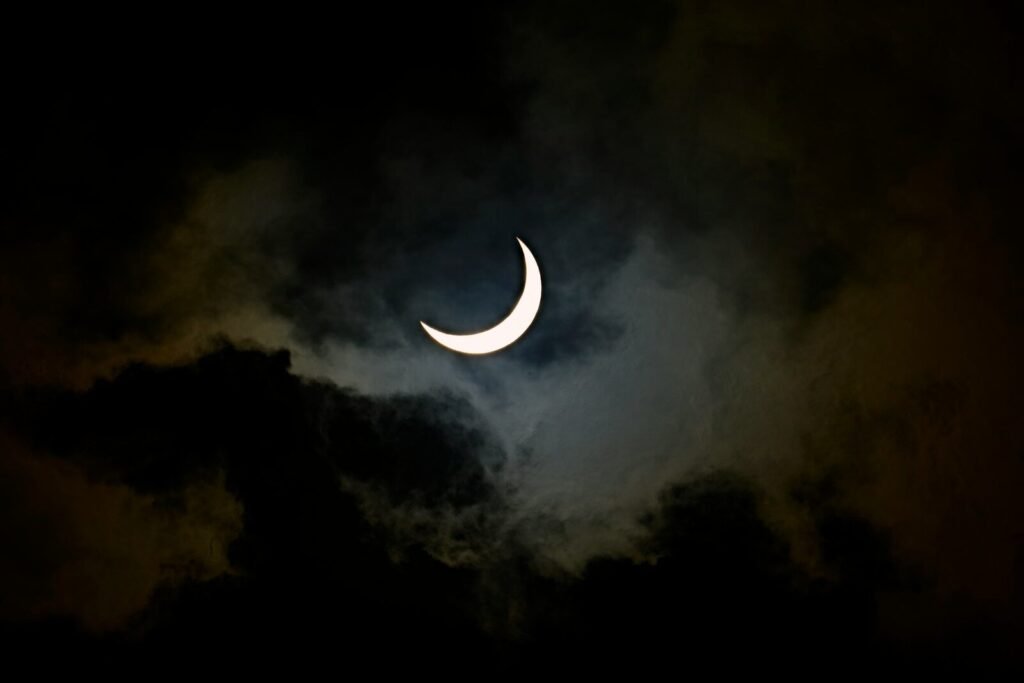
The crescent moon is everywhere in the Muslim world. It tops minarets from Istanbul to Islamabad. It appears on the flags of Pakistan, Turkey, Tunisia, Algeria, Libya, Malaysia, and a dozen other Muslim-majority nations. It decorates mosque architecture, Ramadan decorations, prayer rugs, and Islamic calligraphy. To most of the world, the crescent moon is the symbol of Islam — as recognizable a marker of Islamic civilization as the cross is of Christianity.
But here’s what most Muslims don’t know, and what is genuinely surprising: the crescent moon is not actually an Islamic symbol in the theological sense. It has no basis in the Quran, no basis in the Sunnah, and the Prophet ﷺ never used it as a symbol of the faith. Its association with Islam is historical and cultural — rooted in the Ottoman Empire and further cemented by Arab nationalism in the 20th century — rather than religious.
This article tells the real story.
What the Quran actually says about the crescent moon
The moon — including the crescent — does appear in the Quran, but as a sign of Allah’s creation and as a timekeeping instrument, not as a religious symbol.
“They ask you about the crescent moons. Say: They are measurements of time for the people and for Hajj.” — Surah Al-Baqarah 2:189.
“It is He who made the sun a shining light and the moon a derived light and determined for it phases — that you may know the number of years and account.” — Surah Yunus 10:5.
The Quran treats the moon as one of Allah’s signs — an ayah pointing to the Creator, a tool for calendar-keeping, the marker of the beginning and end of Ramadan and Islamic months. It is not presented as a symbol of Islamic identity.
The Prophet ﷺ never designated the crescent moon as a symbol of Islam. The early Muslim community had no official symbol — no equivalent of the Christian cross or the Jewish Star of David. Islam’s relationship with representational symbols has always been more cautious than other traditions, partly because of the prohibition on idolatry.
The ancient origins of the crescent: long before Islam
The use of the crescent moon as a symbol predates Islam by thousands of years. Tracing its history reveals a journey through ancient Mesopotamia, through the classical Mediterranean world, through the Byzantine Empire, and finally into the Ottoman imperial tradition that became the vehicle for its association with Islam.
Ancient Mesopotamia: The earliest known use of the crescent moon as a religious symbol traces back to Sumer, where it was associated with the moon god Nannar (called Sin in Akkadian). Nannar was considered “Lord of Wisdom” and one of the most important deities of ancient Iraq. The crescent and star formed part of an astral triad with the sun god and Venus. These Sumerian symbols spread throughout the civilizations of the ancient Near East and into the Greek world.
Byzantine Constantinople: The crescent moon was adopted by the city of Byzantium — later Constantinople, later Istanbul — as one of its symbols. According to some accounts, the Byzantines chose it in honor of the goddess Artemis/Diana, associated with the moon. According to other accounts, it was adopted after a miraculous appearance of the crescent moon that was said to have saved the city from a surprise attack. Either way, by the time of the Byzantine Empire, the crescent was firmly associated with Constantinople — the most significant city in the Christian eastern Mediterranean world.
Pre-Islamic use in the Arab world: The crescent and star symbols were also present in pre-Islamic Persia. After the Muslim conquest of Persia in the 7th century, the conquering Muslim rulers kept the coin design of the moon and star symbol minted by the Persian Sasanian Empire, who had ruled from the 3rd century to the 7th century. The Muslims kept these coin designs in circulation during the early caliphate years — not as religious endorsement but as practical continuity of an existing monetary system.
The Ottoman Empire: how the crescent became Islamic
The decisive step in the crescent moon’s association with Islam came through the Ottoman Empire — the most powerful Islamic state of the last several centuries, whose prestige and reach made its symbols synonymous with Islamic civilization in the eyes of the world.
The Ottoman Turks had been using the crescent and star as a symbol before the conquest of Constantinople in 1453. Evidence shows it appeared on Ottoman military standards as early as the reign of Sultan Orhan (c. 1324-1360). One influential legend holds that the founder of the Ottoman Empire, Osman, had a dream in which the crescent moon stretched from one end of the earth to the other — and taking this as a divine omen, adopted it as the symbol of his dynasty.

When the Ottomans conquered Constantinople in 1453, they inherited the Byzantine city along with its associated symbols. The crescent, already in Ottoman use, was now the emblem of an empire that ruled over the heartlands of the Islamic world for centuries — an empire that presented itself as the champion and protector of Islam globally.
For hundreds of years, the Ottoman Empire was synonymous with Islamic civilization in European minds. As European Christian nations fought the Ottomans in wars and crusades, they came to see the crescent as the Islamic counterpart to the Christian cross. The symbol of an empire became, through centuries of conflict and cultural association, the symbol of a religion.
The Pan-Islamic movement of the 19th century, under Sultan Abdul Hamid II, further commercialized and popularized the moon and star motif as symbols of Islamic solidarity across the Muslim world. By the 20th century, as Muslim-majority nations gained independence and chose national flags, many adopted the crescent and star as an expression of Islamic identity — cementing its global association with Islam.
The Quranic role of the moon in Islam
While the crescent is not an Islamic symbol in the theological sense, the moon does play a genuine and significant functional role in Islamic life.
The Islamic calendar is lunar. The Hijri calendar — the Islamic calendar — is based on the lunar cycle. Each month begins with the sighting of the new crescent moon. Ramadan begins when the crescent of the ninth month is sighted. Eid al-Fitr begins when the crescent of the tenth month is sighted. The crescent moon is the literal beginning of every Islamic month.
This functional role gives the crescent genuine Islamic significance — not as a religious symbol in the theological sense, but as the marker of time that governs Islamic worship. Every Muslim who looks for the Ramadan crescent is engaging in an act that traces directly to Quranic instruction.
The moon as an ayah. Throughout the Quran, the moon is cited as one of the signs (ayaat) of Allah — evidence of His power and wisdom in creation. “And of His signs is the night and day and the sun and moon.” — Surah Fussilat 41:37. The crescent, as the most dramatic and beautiful phase of the lunar cycle, has naturally become associated with the religion whose calendar it governs.
What do Muslim scholars say about the crescent as a symbol?
Muslim scholars are divided on the crescent moon’s use as an Islamic symbol:
Those who reject it argue that: it has no basis in the Quran or Sunnah, it originated in pre-Islamic pagan traditions, its adoption by Islam was through the Ottoman Empire rather than divine command, and using it risks elevating a pagan symbol to represent a religion that explicitly rejected paganism. Many Muslim scholars refuse to accept what they see as essentially an ancient pagan icon.
Those who accept it as a cultural symbol argue that: cultural symbols become what communities make of them, the crescent’s association with Islam is now so complete that it functions as a cultural identifier regardless of its historical origins, and there is no prohibition in Islam on using culturally neutral symbols. The crescent carries no theological claim — it doesn’t represent Allah, a prophet, or any doctrine of Islam.
The Islamic tradition has no official symbol in the way that Christianity has the cross. The crescent is, in this sense, a cultural association rather than a religious one — something that identifies Muslim civilization without carrying theological content.
The honest answer
Why does Islam use a crescent moon? Technically, Islam doesn’t — not in any doctrinally prescribed sense. The crescent moon became associated with Islam through a long historical journey: ancient Mesopotamian lunar deities → Byzantine Constantinople → Ottoman Turkish imperial symbolism → global Islamic cultural association through Ottoman prestige → Pan-Islamic movement → national flags of independent Muslim nations → worldwide recognition.
It is a symbol that history gave Islam rather than one Islam chose for itself. And many Muslims, knowing this history, prefer the Kaaba, Quranic calligraphy, or a simple mosque icon as symbols of their faith — feeling that these carry more authentic Islamic meaning than a symbol whose origins lie in pre-Islamic pagan star worship.
What the crescent does genuinely represent is the Islamic lunar calendar — the moon that announces Ramadan, that marks the beginning of each Islamic month, that the Prophet ﷺ told his companions to look for at the start of fasting. In this functional sense, the crescent has earned its association with Islam through the rhythms of Islamic practice, even if not through divine command.
Yala Media Group builds technology for the Muslim community where giving is structural, transparent, and effortless. Learn more at yalamediagroup.com.