Published by Yala Media Group | April 2026
Iman is not a fixed state. It rises and falls. The companions knew this — they spoke openly about it. The tabi’een described it. The scholars of every generation have written about it. The experience of feeling close to Allah and then feeling distant, of being in a state of spiritual clarity and then losing it, is not a sign of defective faith. It is the nature of iman in a human being living in the dunya.
The Prophet ﷺ said: “Iman wears out in your hearts just as clothes wear out, so ask Allah to renew the iman in your hearts.” — Al-Hakim.
Iman wears out. Like clothes. This is not a criticism — it is a description. The question is not whether your iman will fluctuate, but what you do to renew it when it has diminished and to maintain it when it is strong.
The answer the Islamic tradition gives is consistent: small, consistent acts of worship, performed daily, with genuine intention. Not grand gestures on special occasions. Not marathon worship sessions once a month. The hadith recorded in Sahih al-Bukhari states it plainly — the most beloved deeds to Allah are those done consistently, even if they are small. This is not just spiritual advice. It is a description of how iman actually works.
This guide covers the daily acts of worship that the Quran, the Sunnah, and the scholarly tradition identify as most effective for building and maintaining iman — organized to be practically integrated into a busy life, not reserved for an ideal life you don’t yet have.
The obligatory foundation: salah
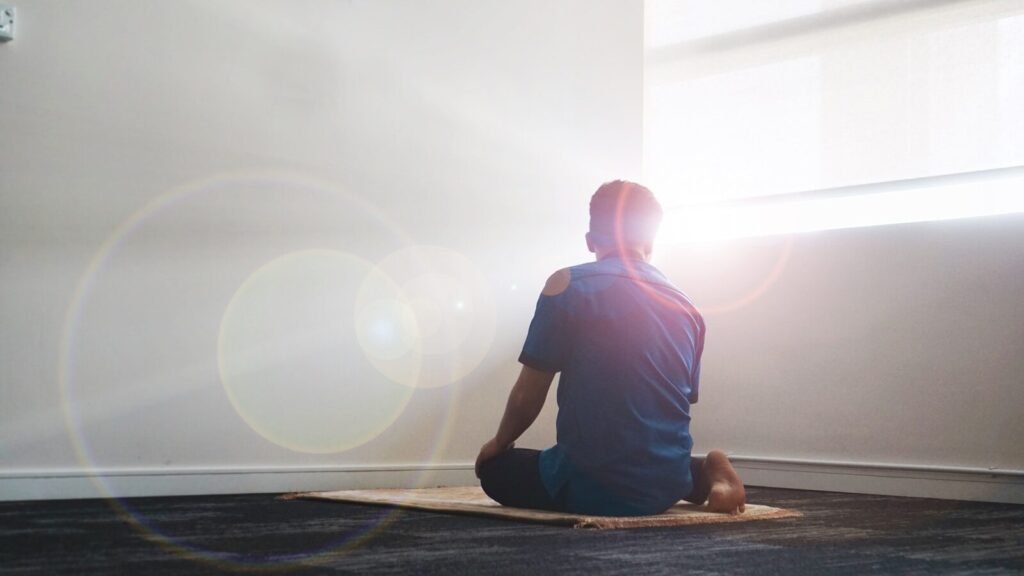
Before any of the voluntary acts, the five daily prayers are the non-negotiable foundation. They are the minimum — and they are also, when performed with presence and intention, among the most powerful iman-building acts available.
The Prophet ﷺ described salah as the dividing line between belief and disbelief — which tells you how seriously the Islamic tradition takes the stakes. But beyond the legal dimension, salah is structurally designed to build iman: five times a day, you stop what you’re doing, perform wudu, face the qibla, and stand before Allah. Five times a day, you recite Al-Fatiha — the Mother of the Book, which includes the affirmation of Allah’s attributes, the acknowledgment of His lordship, and the declaration of dependence on Him alone. Five times a day, you bow and prostrate.
The Muslim who prays five times with genuine presence — who uses each prayer as an actual encounter with Allah rather than a box to check — is performing the most powerful daily iman maintenance available. The challenge is presence. The salah is structured; the khushoo is cultivated.
Practical iman-building practice within salah: Before each prayer, take thirty seconds to set down what you were doing mentally. Say Allahu Akbar as an actual statement — Allah is greater than this deadline, this worry, this conversation. In Surah Al-Fatiha, read each verse with awareness of its meaning. In ruku and sujood, use the extra moments to make personal dua in addition to the prescribed tasbeeh. This practice, applied consistently, transforms salah from obligation to encounter.
1. The morning adhkar — the most underrated daily practice
The morning adhkar — the prescribed remembrances from the Quran and Sunnah recited after Fajr prayer — is the single most effective daily iman-building practice that most Muslims underperform.
The collection typically takes eight to twelve minutes. It includes:
- Ayat al-Kursi (Surah Al-Baqarah 2:255)
- The last two verses of Surah Al-Baqarah
- Surah Al-Ikhlas, Al-Falaq, and An-Nas (three times each)
- Specific morning dua including “Allahuma bika asbahnaa…” (O Allah, by You we enter the morning…)
- Sayyid al-Istighfar — the master supplication for forgiveness
- “Subhanallah wa bihamdihi” (100 times)
- “La ilaha illallah wahdahu la sharika lah…” (10 times)
The scholars consistently identify the morning adhkar as one of the most spiritually protective and iman-generating practices a Muslim can maintain. It sets an Islamic frame for the entire day. It connects the first waking hours to Allah’s remembrance before the dunya’s noise takes over. And it is cumulative — the Muslim who maintains morning adhkar for a year builds something in their heart that is qualitatively different from one who doesn’t.
The evening adhkar — performed after Asr — mirrors the morning collection and completes the daily protective frame. Together, they constitute the most established daily dhikr practice in the prophetic tradition.
Where to find them: Hisnul Muslim (Fortress of the Muslim) is the most widely used compilation of authentic daily adhkar. Available as a free app, a printed booklet, and online. No excuse not to have it.
2. Consistent daily Quran recitation
The Prophet ﷺ said: “Read the Quran, for it will come as an intercessor for its companions on the Day of Resurrection.” — Sahih Muslim.
A daily Quran practice does not require completing a juz per day (though Ramadan is an excellent time to try). It requires consistency. One page after Fajr. Three pages. Half a juz. Whatever is sustainable daily is worth infinitely more than large amounts done sporadically.
The iman-building dimension of Quran recitation is real and documented across the Islamic tradition. The scholars describe a quality that enters the heart through consistent recitation — a softening, a clarity, an awareness of Allah that is difficult to describe to someone who hasn’t experienced it and immediately recognizable to someone who has. This is not metaphor. It is what the Quran does.
Beyond recitation — reading with meaning. Choose one surah per week to read slowly with a reliable translation and basic tafsir. Understanding what you’re reciting changes the experience of recitation. The Muslim who reads Surah Al-Mulk nightly and actually understands each ayah experiences that surah differently than one who recites it from memory without comprehension.
Practical implementation: Keep a Quran on your nightstand, in your car, at your desk. Make it physically present in the spaces where you have time. The Muslim who has to go looking for a Quran will recite less than the one who cannot avoid seeing it.
3. Salat al-Duha — the forgotten morning prayer
Salat al-Duha — the voluntary mid-morning prayer, performed after sunrise has risen fully and before the sun reaches its zenith — is one of the most consistently praised voluntary prayers in the hadith literature, yet among the least observed by ordinary Muslims.
The Prophet ﷺ said: “Whoever prays the Duha prayer and remains consistent, their sins will be forgiven even if they are like the foam of the sea.” — Tirmidhi.
Duha is performed in units of two, with a minimum of two rak’at and a maximum of twelve. The most commonly recommended amount is four or eight rak’at. It is prayed after the sun has fully risen — typically about 20 minutes after sunrise — until approximately 15 minutes before Dhuhr.
For working Muslims, Duha is practical: it falls before the workday is fully underway. Praying two or four rak’at after Fajr adhkar, before beginning the commute or the work itself, is entirely achievable for most schedules and produces a measurable effect on the quality of the morning.
4. Salat al-Witr — closing the night with Allah
Witr — the odd-numbered prayer performed after Isha — is one of the practices the Prophet ﷺ never abandoned, even when traveling. He described it as a gift from Allah to his ummah: a prayer that acts as a final connection to Allah before sleep, a seal on the day’s worship.
Witr can be prayed as one, three, five, seven, or eleven rak’at depending on the madhab and personal practice. The most common and most accessible format for a working Muslim is three rak’at after Isha — taking approximately five minutes. In the third rak’at, the Qunut dua is recited: a supplication asking Allah for guidance, wellbeing, protection, and mercy.
The scholars have consistently noted that witr, maintained daily, produces a quality of connection with Allah that voluntary prayers performed randomly during the day cannot replicate. It is the practice of intentionally ending your day with Allah — as deliberately as you began it with the morning adhkar.
5. Daily istighfar — seeking forgiveness consistently
“Whoever makes istighfar abundantly, Allah will relieve them of every worry, and will grant them a way out of every hardship, and will provide for them from where they did not expect.” — Abu Dawud.
Istighfar — seeking Allah’s forgiveness — is among the most powerful daily practices in the Islamic tradition, and among the most democratized: it requires nothing but a tongue and an intention. Astaghfirullah said with genuine awareness of what it means — I ask Allah for forgiveness — is an act of worship available at any moment, in any circumstance, with any level of religious knowledge.
The Prophet ﷺ — who was forgiven of all sin, past and future — sought forgiveness more than seventy times per day. This is not because he needed it. It is because istighfar is fundamentally about proximity to Allah, not just about sin removal. The Muslim who maintains abundant daily istighfar builds a different relationship with their own spiritual state — more aware of their dependence on Allah, more honest about their imperfection, more genuine in their worship.
Practical implementation: Combine istighfar with daily activities. During the commute, instead of music or podcasts: Astaghfirullah. While waiting in line. While doing dishes. During any activity that occupies the hands but leaves the tongue free. The Prophet ﷺ’s companions described making istighfar constantly in their daily activities — integrating worship into life rather than separating it.
6. Salawat upon the Prophet ﷺ — daily connection to the best human being
“Whoever sends one blessing upon me, Allah will send ten blessings upon him.” — Sahih Muslim.
Salawat — the sending of blessings and peace upon the Prophet ﷺ — is a command from Allah Himself: “Indeed, Allah and His angels send blessings upon the Prophet. O you who have believed, ask Allah to confer blessing upon him and grant him peace.” — Surah Al-Ahzab 33:56.
Daily salawat — Allahumma salli ‘ala Muhammad wa ‘ala ali Muhammad — connects the Muslim to the Prophet ﷺ in a way that deepens love for him, awareness of his example, and alignment with his sunnah. The scholars describe the effect of abundant salawat as producing a softening of the heart and an increase in spiritual light — qualities that are themselves definitions of increased iman.
The Friday sunnah: The Prophet ﷺ specifically encouraged abundant salawat on Fridays: “Send blessings upon me abundantly on Friday, for your salawat are presented to me.” — Abu Dawud. Make Friday the day of most abundant salawat, and maintain it as a daily practice throughout the week.
7. Charity — daily sadaqah as a spiritual practice
“Sadaqah extinguishes sin as water extinguishes fire.” — Tirmidhi.
The hadith that the most beloved deeds are those done consistently applies to charity as directly as it applies to prayer. A small amount given daily — even one dollar, even a few cents — as a consistent sadaqah practice produces more barakah, more spiritual benefit, and more iman-building effect than larger irregular gifts.
The Prophet ﷺ never turned away a person who asked him for something. His generosity was consistent and immediate. Building a small daily sadaqah habit — automating a recurring donation, carrying small amounts to give away, using a sadaqah app or browser extension — is one of the most practically achievable and spiritually effective iman-building acts available to modern Muslims.
The psychological and spiritual research on generosity is consistent: people who give regularly report higher wellbeing, stronger sense of purpose, and greater life satisfaction. The Islamic tradition attributes this to barakah — and the effect is real regardless of what you call it.
8. Dhikr after each prayer — the ten-minute investment
The Prophet ﷺ recommended specific dhikr after each of the five daily prayers — a practice that takes approximately ten minutes total across the full day:
- Subhanallah (33 times)
- Alhamdulillah (33 times)
- Allahu Akbar (33 times)
- La ilaha illallah wahdahu la sharika lah, lahul mulku wa lahul hamd wa huwa ‘ala kulli shay’in qadir (once)
Abu Hurayrah (RA) reported that the Prophet ﷺ said: “Whoever says this after each prayer will have their sins forgiven even if they were like the foam of the sea.” — Sahih Muslim.
This is among the easiest daily practices to maintain because it is attached to an already-established obligation — the five daily prayers. After finishing the tasleem, before picking up the phone, before standing up: the ten minutes of post-prayer dhikr. Muslims who maintain this describe it as extending the spiritual state of the prayer rather than abruptly dropping back into the dunya.
9. Night prayer — tahajjud even if rarely
“The best prayer after the obligatory prayers is the night prayer.” — Sahih Muslim.
Tahajjud — the voluntary prayer in the last third of the night — is described in the Quran and Sunnah as among the most powerful acts of worship available to the believer. It is the prayer of the people Allah mentions with praise: those who forsake their beds to call upon their Lord in hope and fear.
This does not mean you must pray tahajjud every night. The principle of consistency applies — two rak’at once a week, performed with genuine presence, is worth more than aspirational intentions about extended nightly worship that never materialize. Begin with once a week: set an alarm, wake twenty minutes before Fajr, pray two rak’at, make dua in sujood. Do this once. Then twice. Then regularly when it has become part of your practice.
The scholars consistently identify tahajjud as the fastest path to increased iman for those who cannot maintain it daily — because even rare tahajjud breaks the pattern of the nafs and reestablishes the primacy of worship over comfort.
Building a sustainable daily practice
The temptation when reading a list like this is to attempt everything immediately and then abandon it within two weeks when life intervenes. Resist that temptation.
Start with three practices: morning adhkar, post-prayer dhikr, and daily Quran recitation. Do these consistently for thirty days. Once they are habituated — once they feel as automatic as brushing your teeth — add one more. Then another.
The Muslim who maintains three practices consistently for a year is building something real. The Muslim who attempts ten practices and abandons them within a month has built nothing.
The Prophet ﷺ said the most beloved deeds are those done consistently, even if they are small. This is the architecture of Islamic spiritual life. Small, consistent, intentional acts — performed daily, maintained through difficulty, renewed after failure — accumulate into something that the scholars call a living heart (qalb hayy): a heart responsive to Allah, oriented toward the akhirah, and at peace in the dunya because of what it has built in private.
That is the goal. Begin today. With what you can actually sustain.
Yala Media Group builds technology for the Muslim community where giving is structural, transparent, and effortless. Learn more at yalamediagroup.com.