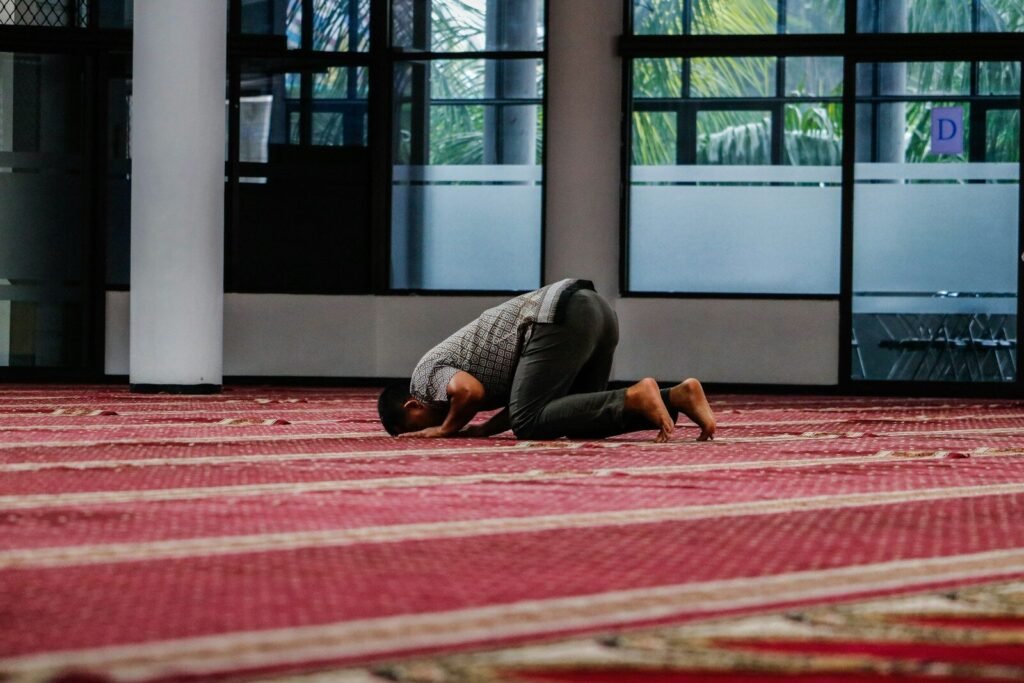
Published by Yala Media Group | April 2026
Salah is not something you schedule around your work day. It is something you schedule your work day around. The five daily prayers are not optional practices that fit into life’s margins — they are the pillars that hold the structure of the day upright. “Indeed, prayer has been decreed upon the believers a decree of specified times.” — Surah An-Nisa 4:103.
For Muslim professionals working in American corporate environments, maintaining all five daily prayers is both a legal right and a practical challenge that requires strategy, communication, and the confidence to treat your religious obligations with the same seriousness your employer treats meetings.
This guide covers everything: which prayers fall during typical work hours, the legal framework protecting your right to pray, how to find a space, how to communicate with your employer, and the practical logistics that experienced Muslim professionals have figured out through years of navigating this.
Which prayers fall during work hours
Understanding the prayer windows is the starting point. Prayer times shift throughout the year as the sun’s position changes, so the specific times vary by season and location — use an app like Muslim Pro, Athan Pro, or the ISNA prayer time calculator for your specific city.
In a typical 9-to-5 American work schedule, here is how the five prayers generally fall:
Fajr (dawn prayer): Before work for most of the year. This is usually not a workplace issue — pray before you leave home. In summer months when dawn is very early, this is relatively easy. In winter months it may require waking before 6am.
Dhuhr (midday prayer): Almost always falls during working hours — typically between noon and 2pm depending on the season and your location. This is the most consistently manageable work prayer because it aligns naturally with lunch breaks. The prayer itself takes five to seven minutes. With wudu already performed, Dhuhr fits into a standard lunch break with time to spare.
Asr (afternoon prayer): This is the most variable and often the most challenging. In summer, Asr can fall as late as 5 or 6pm — after most work hours. In winter, it falls as early as 2:30 or 3pm — squarely in the middle of the afternoon. Winter Asr is where most Muslim professionals need the most deliberate accommodation.
Maghrib (sunset prayer): Usually falls after work hours for most of the year. In summer, sunset is late enough that Maghrib falls well after the workday ends. In winter, it may fall before 5pm — sometimes during work hours. Monitor this seasonally.
Isha (night prayer): After work for virtually the entire year. Rarely a workplace issue.
The practical summary: For most Muslim professionals, Dhuhr and sometimes Asr are the prayers that require workplace accommodation. Occasionally Maghrib in winter. Fajr and Isha are almost never workplace issues.
Your legal rights
The law is clearly on your side. Title VII of the Civil Rights Act of 1964 requires employers to provide reasonable religious accommodation unless it causes undue hardship — and after the Supreme Court’s 2023 decision in Groff v. DeJoy, the undue hardship bar is significantly higher than it was before. Employers must now show that accommodation would cause substantial increased costs, not just minor inconvenience.
The practical meaning: your employer is legally required to find a way to accommodate your prayer breaks unless they can demonstrate that doing so causes substantial operational harm. In most office environments, a Muslim employee taking two to three five-to-ten minute prayer breaks during a workday does not meet this threshold.
The EEOC provides a specific instructive example: Rashid, a janitor, requests a change in his break schedule to accommodate prayers. His requested change won’t exceed his total allotted break time and won’t cause undue hardship. He is entitled to accommodation.
That example applies across job types. If your accommodation request doesn’t require your employer to hire additional staff, fundamentally alter their operations, or impose more than minor costs, the law supports your right to pray.
Finding a place to pray at work
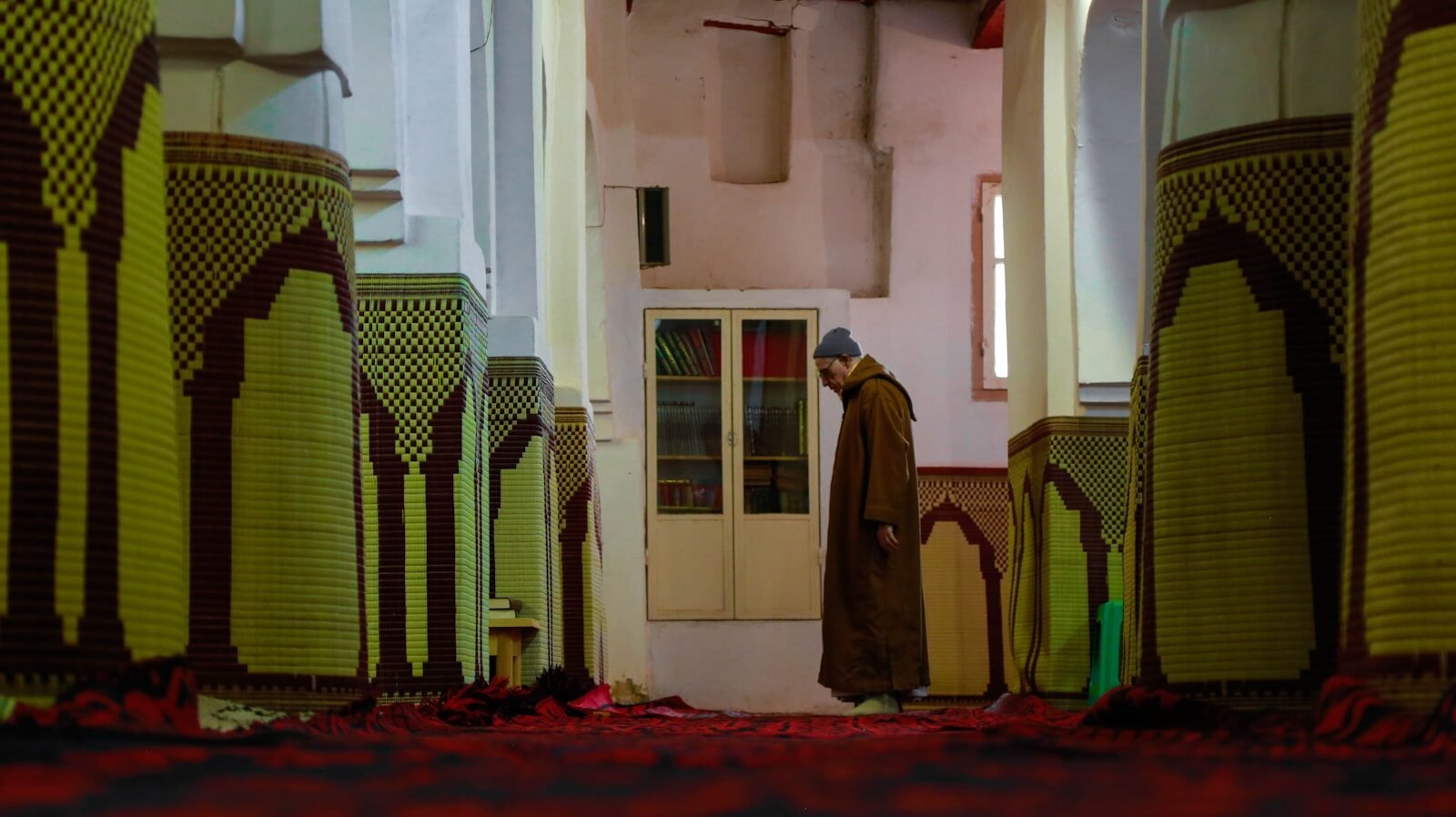
Before your first day at a new job — or as soon as you decide to start praying at work — scout your environment. You need a clean, quiet space that allows for standing, bowing, and prostrating. Privacy is desirable but technically not required. What is required is a clean space (not a bathroom) and enough room to complete the movements.
Options to look for:
Empty conference rooms are the most reliable option in office environments. Book one for ten minutes using the room scheduling system if your company uses one — or simply check for an available room at your prayer time. Most offices have conference room availability on their scheduling software.
Wellness rooms and meditation rooms are increasingly common in larger American companies, particularly in tech and healthcare. These are typically available for exactly this kind of use and require no special permission.
Your own office or private workspace if you have one. A closed door and a prayer mat solves everything.
Quiet corners in large office spaces — stairwells, empty sections of an open floor plan, storage rooms — work in environments where formal prayer spaces aren’t available.
Outdoor spaces — a quiet courtyard, a less-trafficked section of a parking garage, a park nearby — are viable in good weather and genuinely peaceful.
What not to use: Bathrooms. This is both practically inappropriate (bathrooms are not clean spaces for salah) and unnecessary given the alternatives available in virtually every workplace.
One practical tool: The qibla direction. Download an app with a qibla compass before you need it. Muslim Pro, Qibla Finder, and similar apps use your phone’s GPS to show the direction of Makkah from your exact location. You don’t need to orient yourself from memory in an unfamiliar office — your phone handles it.
Performing wudu at work
Wudu requires washing hands, face, arms to the elbows, wiping the head, and washing feet. In a standard office restroom, this is entirely doable.
Practical tips from Muslim professionals who have been doing this for years:
Wear shoes and socks that come off easily. Slip-on shoes or loafers are significantly easier for wudu than laced dress shoes.
Use the disabled access restroom stall if available — more space, a grab bar that doubles as a balance point for foot washing, and usually a single-occupancy lock for privacy.
Keep a small towel at your desk. Paper towels work but a small personal towel is cleaner, drier, and more dignified.
If your wudu was performed before work and you haven’t broken it, you don’t need to repeat the full wudu between prayers. Wudu remains valid until it is broken. For many Muslim professionals, one morning wudu with careful maintenance covers Dhuhr and Asr without needing to repeat the full process.
Masah over khuffain (wiping over socks): If you follow the opinion that masah over leather socks or waterproof socks is permissible, this significantly simplifies workplace wudu — you can wipe over your socks rather than removing them and washing your feet. Consult your scholarly reference for the conditions and duration of this allowance.
Communicating with your employer
Most Muslim professionals who pray consistently at work describe the same experience: the conversation they dreaded having turned out to be simpler than they expected, and most managers responded with accommodation rather than resistance.
When to have the conversation: Before a conflict arises, not after. Telling your manager on your second week that you need ten minutes for prayer during the afternoon is received very differently than telling them after you’ve already been absent from a meeting unexpectedly.
How to frame it: Simply and specifically. “I’m Muslim and I pray five times a day. Two of those prayers fall during work hours — typically around noon and mid-afternoon. Each one takes about ten minutes. I wanted to let you know so we can plan around it when scheduling meetings.” That’s the whole conversation for most professional environments.
What to put in writing: Once you’ve had the verbal conversation, follow up with a brief email summarizing the accommodation — what you discussed, what was agreed, and your contact information for any questions. This creates a record without making the conversation feel adversarial.
If you face pushback: Ask for the specific hardship your prayer breaks create. “We have a policy of no breaks during X window” is not a legally sufficient reason to deny accommodation after Groff. “Your prayer breaks would require us to hire additional staff” might be. Push gently for specificity. Most pushback dissolves under gentle questioning because there often isn’t a substantive hardship — just unfamiliarity.
Managing prayer across different work environments
Open plan offices: The lack of private spaces in open offices is the most common modern challenge. The solution is finding a conference room or booking one at your regular prayer times. If your company has a room scheduling system, block ten minutes at your prayer windows as a recurring calendar event — this reserves the space and signals to colleagues that you’re unavailable without requiring any explanation.
Client-facing roles: Sales professionals, consultants, and client-facing employees sometimes feel that prayer breaks are incompatible with the demands of client service. They’re not — but they require more proactive planning. Before client visits, identify where you’ll pray. Build time buffers around prayer windows when scheduling client meetings. Clients who learn their contact prays five times a day almost universally respond with respect rather than inconvenience.
Travel for work: Hotels have rooms. Airports have quiet corners, interfaith rooms, and (in major international airports) dedicated prayer rooms. Rental cars have back seats. Work travel is manageable for praying Muslims — it requires more creativity than the office, not more sacrifice.
Remote work: If you work from home full or part time, prayer becomes entirely your own to manage. Remote work days are your lowest-friction prayer days. Structure them accordingly.
Shift work: Shift workers face the most structural challenge because their hours don’t conform to a fixed daily pattern. The same legal protections apply — the employer must make reasonable effort to accommodate, including looking for voluntary shift swaps among colleagues before concluding accommodation is impossible.
The spiritual dimension of praying at work
There is a quality of prayer that happens in a work environment that is different from prayer at home. It is a prayer performed in the middle of the world — while the meeting is still pending, while the email is still unanswered, while the deadline is still approaching. It is a conscious interruption of the dunya to remember Allah in the middle of the dunya. That quality is itself a form of worship.
The Prophet ﷺ said: “The first thing the servant will be asked about on the Day of Judgment is the prayer. If it is good, the rest of his deeds will be good. If it is bad, the rest of his deeds will be bad.” — Al-Tabarani.
The Muslim professional who protects their prayer in the workplace is not choosing their deen over their career. They are bringing their deen into their career — which is exactly where it belongs.
Yala Media Group builds technology for the Muslim community where giving is structural, transparent, and effortless. Our browser extension turns everyday browsing and Amazon shopping into passive sadaqah — automatically, at no cost to you. Learn more at yalamediagroup.com.