
Published by Yala Media Group | April 2026
The Prophet ﷺ was an athlete. He raced on foot with his wife Aisha (RA) — she won the first time, he won the rematch, and he laughed both times. He wrestled. He rode horses. He swam. He encouraged archery with such consistency that the companions took it as an obligation. He said: “Any action without the remembrance of Allah is either a diversion or heedlessness — except for four things: walking between two targets, training your horse, playing with your family, and learning to swim.”
Four explicitly recommended physical activities. In a single hadith. From a Prophet whose sunnah covers everything from the etiquette of entering a room to the proper way to sleep.
Islam has never had a problem with sports. The problem has always been the infrastructure — Muslim youth in America growing up in communities without dedicated athletic spaces, parents uncertain which sports align with Islamic values, young Muslims navigating team environments built around practices that conflict with their faith, and coaches who don’t understand what Ramadan is or why a player needs to pray at halftime.
That infrastructure is being built. In 2025, over 8,000 athletes from more than 750 teams participated in Islamic Games held across the USA and Canada, with the 2026 edition anticipated to attract over 10,000 athletes from more than 900 teams. The Muslim Youth Center of America is in development. Mosque gyms are being built. Muslim leagues are forming in cities across the country.
This article is a guide for Muslim parents and youth navigating sport selection — which sports work well for Muslim youth in America, which require the most navigation around Islamic considerations, and what the broader landscape of Muslim athletics looks like right now.
The Islamic framework for sport
Before the list, the principles — because understanding them helps parents make better decisions than any ranking could.
The body is an amanah. The Prophet ﷺ said: “Your body has a right over you.” Physical health is not separate from deen — it is part of the trust Allah placed in us. Sport is one of the most natural and historically endorsed ways to fulfill that trust.
Modesty in dress. This is the most practical consideration for Muslim youth in sports, particularly girls. Sports that accommodate modest athletic wear — leggings, long sleeves, sports hijab — are more easily navigated than those with mandatory uniform standards that conflict. Most mainstream sports in America have become significantly more accommodating of religious dress over the past decade, but the requirements vary by sport and league.
Gender segregation. Many Muslim families prefer single-sex sports environments, particularly for older youth. This affects which leagues, clubs, and school programs are appropriate. Islamic Games and other Muslim sports organizations provide gender-separated divisions as a standard feature.
Prayer accommodation. Any serious Muslim athlete needs their sport environment to accommodate five daily prayers. Games and practices that routinely conflict with prayer times — particularly Jumu’ah on Fridays — require either advocacy for accommodation or alternative league structures.
Avoiding haram environments. Some parts of American sports culture don’t align with Islamic values — Muslim athletes at the collegiate level sometimes face social pressure around spaces like bars or nightclubs where American sports culture is blended with the consumption of alcohol. Navigating that is tough at first, especially when you’re younger. Choosing a sport with strong Muslim community infrastructure reduces these conflicts.
The goal is character, not just competition. Islamic Games upholds the dignity of every athlete and affirms that sportsmanship is not only a pursuit of victory but also a pathway for character development and service to others. Sport in the Islamic tradition is not purely competitive — it is a means of building the qualities the deen values: discipline, resilience, teamwork, humility, and physical excellence.
The best sports for Muslim youth in America
1. Soccer
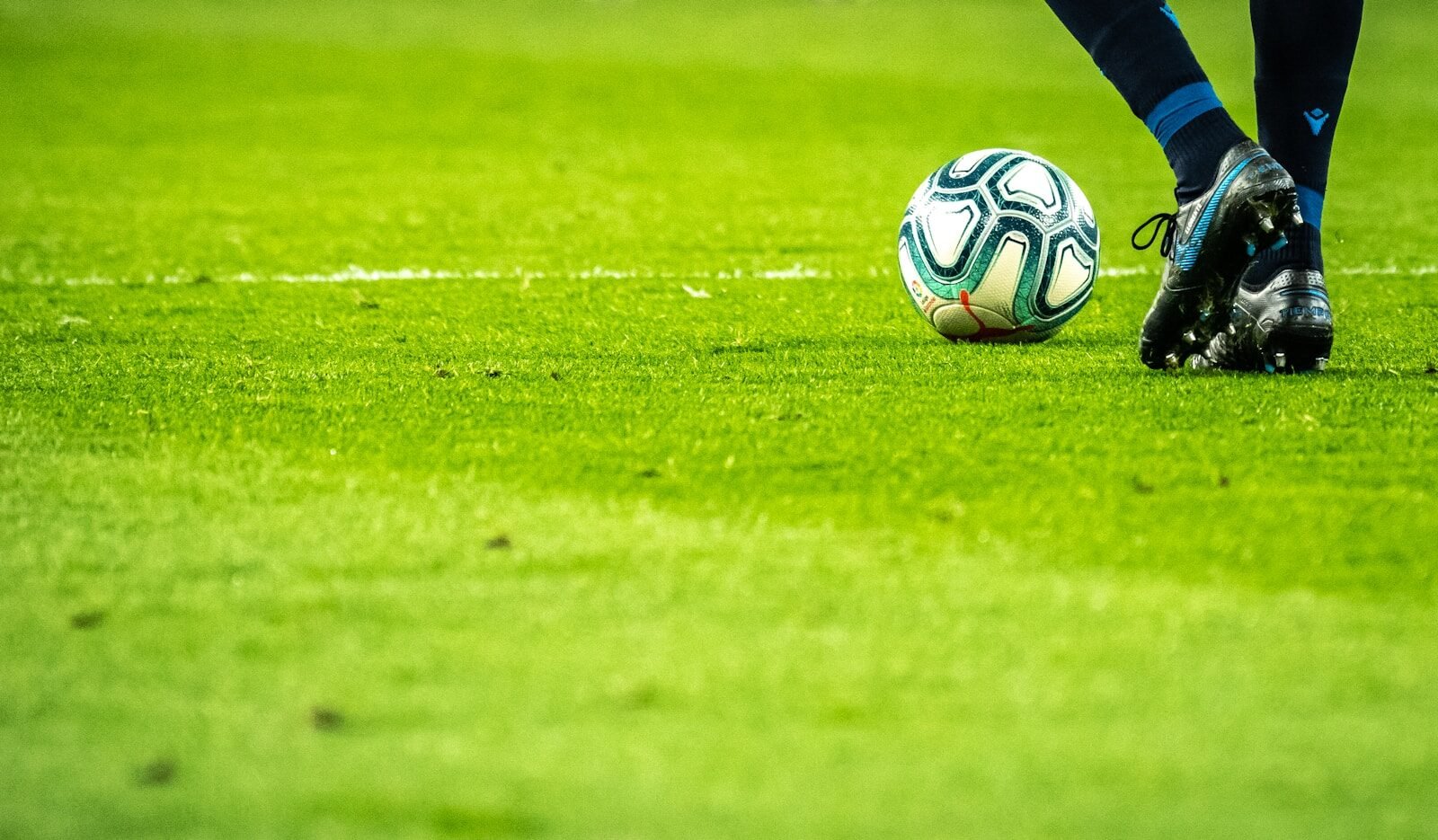
Soccer is the global sport of the Muslim world and the most natural starting point for Muslim youth in America. Four of Goal’s top 10 global power rankings in 2025 are Muslim — including Lamine Yamal, Mohamed Salah, and Achraf Hakimi — and Ousmane Dembélé won the men’s Ballon d’Or in 2025, becoming just the third Muslim to win the award since its debut in 1956.
That visibility matters for Muslim youth. Seeing themselves represented at the highest levels of the sport they’re playing is a form of motivation that coaches and parents can’t manufacture.
Practically, soccer works well for Muslim youth for several reasons. The uniform — shorts and a jersey — can be modified with leggings and long sleeves without impacting performance significantly. The sport is available at every level from recreational leagues to competitive travel clubs to school teams across virtually every American city. Muslim soccer leagues and Islamic Games soccer divisions exist in most major metropolitan areas.
The Ummah Athletics Association specifically offers soccer programs designed for Muslim youth, with a community-centered environment rooted in discipline, respect, and honor. This kind of Muslim-specific infrastructure removes many of the navigational challenges of mainstream youth sports leagues.
Islamic considerations: Low. Modest dress easily accommodated. Strong Muslim community infrastructure nationally. Prayer accommodation possible with awareness from coaches.
2. Basketball
Basketball has produced some of the most prominent Muslim athletes in American sports history — Kareem Abdul-Jabbar, Hakeem Olajuwon, and a growing number of current NBA players who are open about their faith. Athletes such as Kyrie Irving, Jaylen Brown, and Jusuf Nurkić expose a lot of people to Islam by discussing their faith without fear.
For Muslim youth, basketball is one of the most accessible sports in America — it requires minimal equipment, can be played on any outdoor court, and is universally available through school programs, rec centers, and community leagues. Muslim basketball leagues operate across the country, and Islamic Games basketball divisions are among the most competitive and well-attended events at the annual games.
The Muslim Youth Center of America — currently in development — specifically identifies basketball as a core sport in its programming. The MYCA has already hosted a successful event called the “Shaykh N’ Bake Celebrity All-Star Game” at the Naismith Memorial Basketball Hall of Fame in Springfield, Massachusetts.
For girls, basketball in modest athletic wear — leggings, long sleeves, sports hijab — is entirely achievable. A growing number of Muslim girls’ basketball programs operate through Islamic schools and mosque leagues.
Islamic considerations: Low to moderate. Uniform modifications straightforward. Strong Muslim community infrastructure in most major cities. Prayer and Jumu’ah accommodation requires communication with coaches.
3. Martial arts
The Prophet ﷺ was a wrestler and encouraged physical combat training. The Islamic tradition has a long history with martial arts — from the wrestling traditions of Turkish and Central Asian Muslim cultures to the fighting arts practiced by early Muslim armies. For Muslim youth in America, martial arts are one of the most individually accommodating sports available.
Disciplines worth considering:
Wrestling — the most directly prophetically endorsed combat sport. Widely available through middle and high school programs across America. Builds extraordinary physical and mental discipline. No uniform concerns for boys; for girls, modest singlets or modified uniforms are increasingly accommodated.
Judo — a Japanese martial art with strong Islamic parallels in its emphasis on respect, discipline, and using your opponent’s strength against them. Judo appears in the Islamic Solidarity Games and has a growing Muslim athletic community internationally.
Karate and Taekwondo — both appear in the Islamic Solidarity Games and are widely available through community programs. The uniform (gi or dobok) is modest and suitable for Muslim athletes of both genders.
Boxing and MMA — these require more consideration around the permissibility of striking the face, which is a point of scholarly difference. Many scholars permit boxing and MMA as sports while noting the importance of avoiding genuine harm. Athletes like Khabib Nurmagomedov, Belal Muhammad, and Islam Makhachev have made Islam visible at the highest levels of combat sports, discussing their faith publicly and without apology. Muslim youth pursuing MMA are following a well-established tradition of Muslim excellence in the sport.
Islamic considerations: Low for wrestling, judo, karate, and taekwondo. Moderate for boxing and MMA depending on scholarly guidance followed by the family. All martial arts emphasize respect and discipline that align naturally with Islamic character formation.
4. Swimming
“Teach your children swimming, archery and horse riding.” — attributed to Umar ibn al-Khattab (RA)
Swimming is one of the most frequently recommended sports in Islamic tradition and one of the most practically beneficial for physical health. It is a full-body workout, low-impact, and a genuine survival skill.
The primary practical challenge for Muslim youth — particularly girls — is the pool environment. Mixed-gender pools, swimsuit standards, and changing facilities can create friction for observant Muslim families. Solutions exist: private pool rentals, gender-separated swim sessions (increasingly available at community pools and Islamic centers), and Islamic swimwear (burkini) that allows full modesty in the water.
For boys, swimming is straightforward — modest shorts are entirely acceptable swimwear in competitive and recreational contexts. For girls, the logistics require more research but are solvable in most cities with deliberate effort.
The physical benefits of swimming — cardiovascular fitness, full-body strength, joint protection — make the logistical investment worthwhile. Muslim parents who establish swimming as a childhood skill are giving their children a sunnah-endorsed physical practice for life.
Islamic considerations: Moderate for girls due to pool environment logistics. Low for boys. Worth the effort given the Islamic tradition’s strong recommendation of swimming as a life skill.
5. Archery
“Practice archery and practice riding horses, and that you should practice archery is dearer to me than that you ride horses.” — Sahih Muslim
Archery is the most explicitly prophetically endorsed sport on this list. The Prophet ﷺ loved it, the companions practiced it, and the early Muslim community was encouraged to maintain it as a practical and spiritual discipline.
For Muslim youth in America, archery is accessible, safe, gender-neutral in practice, and increasingly popular. Most states have archery clubs and ranges that cater to beginners. USA Archery has youth programs in most major cities. Islamic Games includes archery as a featured event.
Beyond the Islamic sanction, archery develops exceptional focus, patience, breath control, and mental discipline — qualities that translate directly into academic performance, prayer quality, and character development. The quiet intensity of archery practice is a natural complement to the contemplative dimension of Islamic spirituality.
For Muslim families looking for a sport that is simultaneously sunnah-endorsed, practical, modest, gender-inclusive, and genuinely skill-building — archery deserves serious consideration.
Islamic considerations: Virtually none. Explicitly endorsed by the Prophet ﷺ. Modest dress entirely compatible. Mixed-gender practice environments are standard but non-contact.
6. Track and field / cross country
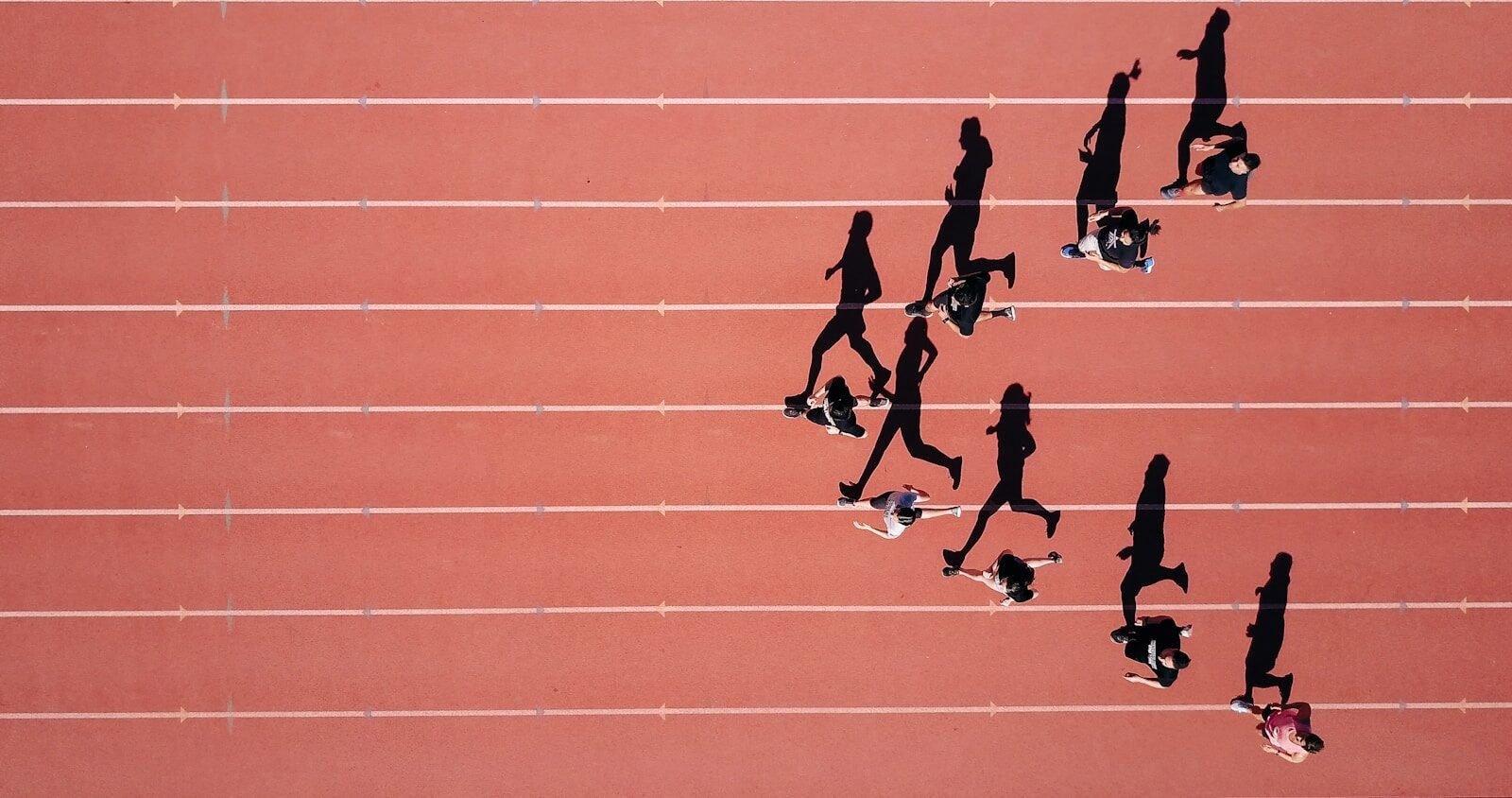
Running is among the simplest, most accessible, and most universally human athletic practices. The Prophet ﷺ ran. He encouraged physical exertion. Early Muslim soldiers maintained legendary physical conditioning.
For Muslim youth in America, track and field and cross country offer significant advantages. The individual nature of the sport means performance is self-determined — there is no team dynamic that requires navigating alcohol-adjacent social environments. Modest athletic wear — leggings, long sleeves, sports hijab — is standard and accepted in virtually every track program in the country.
Muslim women in particular have found track and field to be one of the most accessible competitive sports in the American context. The sports hijab has become mainstream in track competition, and Muslim women runners compete at the collegiate and national level without significant accommodation challenges.
Cross country specifically has a reflective, meditative quality that many Muslim athletes find spiritually compatible. Running through natural landscapes, alone with your thoughts and your breath — it is a practice the scholars of spirituality would recognize.
Islamic considerations: Very low. Modest athletic wear standard. Individual sport removes many social navigation challenges. Strong representation of Muslim women athletes at competitive levels.
7. Volleyball
Volleyball appears consistently in Islamic Games competitions and is one of the most popular sports in Muslim community leagues, particularly for women. It is modest, non-contact in its standard form, team-oriented, and widely available through school and community programs.
For Muslim girls specifically, volleyball is one of the most natural sport choices in America. The uniform — shorts and a jersey in standard play — can be modified with leggings without impacting the game. Many Muslim girls’ leagues play in full modest athletic wear as the standard rather than the exception.
The team dynamics of volleyball — communication, trust, synchronized effort — build community and interpersonal skills that align with the values the Islamic tradition emphasizes. A volleyball team that prays together before matches, accommodates Ramadan fasting in training schedules, and competes with integrity is a model of what Muslim youth sports can look like.
Islamic considerations: Low. Easily accommodated modest dress. Strong Muslim community infrastructure particularly for women. Non-contact reduces some gender-related concerns.
8. Cricket
For South Asian, Caribbean, and British Muslim youth — a significant and growing segment of the American Muslim population — cricket is not just a sport but a cultural inheritance. Muslim-majority nations dominate international cricket: Pakistan, Bangladesh, and Muslim-majority regions of India and the West Indies.
Cricket is growing in America. Major League Cricket launched its first season in 2023 and has expanded rapidly. Youth cricket leagues exist in cities with significant South Asian populations — New York, New Jersey, Houston, Chicago, Dallas — and Islamic Games has included cricket as a featured event.
For Muslim youth with South Asian or Caribbean heritage, cricket provides athletic development alongside cultural connection and community identity. It is the sport that connects them to their parents’ and grandparents’ world while being increasingly available in the American context.
Islamic considerations: Very low. Modest dress standard in the sport. Strong existing Muslim community infrastructure in cricket leagues across America.
The broader landscape — Muslim sports infrastructure in America
Muslim youth athletes in 2026 have institutional support that previous generations simply did not have.
Islamic Games is North America’s largest Muslim sports and athletic event, featuring basketball, soccer, volleyball, cricket, softball, flag football, track and field, swimming, tennis, table tennis, badminton, pickleball, cycling, archery, arm wrestling, fitness course, and martial arts, with separate divisions for male and female athletes across all age categories.
Islamic Games is partnered with over 200 leagues and academies and puts on seven sports events annually across North America. The 2026 games are scheduled across multiple cities including New Jersey (June), Chicago (July), and others.
The Ummah Athletics Association operates soccer programs specifically designed for Muslim youth with a community-centered environment. The Muslim Youth Center of America is working toward a physical facility modeled on the YMCA but rooted in Islamic values. Muslim school athletic programs are expanding as Islamic schools across America grow in enrollment.
Saludeen Nausrudeen, president of Islamic Games of North America, believes that every human being has a natural aptitude in at least one sport, and that one way to connect people to athletics is to provide access to different facilities in the community. “Muslims in America want to do what’s American and what’s halal. There’s nothing better than sports, which is both American and halal.”
That framing is exactly right. Sport is not a concession to American culture — it is a sunnah practice that happens to be deeply embedded in American culture. Muslim youth who participate in athletics are not compromising their faith. They are expressing it.
Practical advice for Muslim parents
Research the league before you sign up. Not all recreational leagues are equal in their willingness to accommodate religious needs. Look for leagues that have existing Muslim players, have accommodated prayer breaks before, or are run through Muslim community organizations. The first conversation about prayer and Jumu’ah accommodation is much easier before registration than after.
Connect with Islamic Games. Regardless of which sport your child pursues, Islamic Games is the most comprehensive platform for Muslim youth athletics in America. Their website lists upcoming events, and many local Islamic schools and centers participate in their leagues. Getting your child into an Islamic Games event — even once — exposes them to thousands of Muslim athletes their age and communicates powerfully that being Muslim and being an athlete are not in tension.
Model sport yourself. Children who see their parents exercise, who are taken to the park for a jog, who grow up in a household where physical activity is normal — these children are far more likely to develop lasting athletic habits. The sunnah is not just archery and swimming in theory. It is moving your body, regularly and joyfully, as an expression of gratitude for the body Allah gave you.
Let them find what they love. No list of recommended sports — including this one — is a substitute for letting a child try things and discover what genuinely engages them. The goal is not a specific sport. The goal is a child who has a healthy, active physical life that is compatible with their faith and that they will sustain into adulthood. That goal is served by exposure, encouragement, and patience more than by prescription.
Yala Media Group builds technology for the Muslim community where giving is structural, transparent, and effortless. Our browser extension turns everyday browsing and Amazon shopping into passive sadaqah — automatically, at no cost to you. Learn more at yalamediagroup.com.